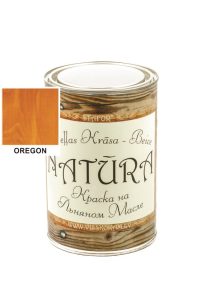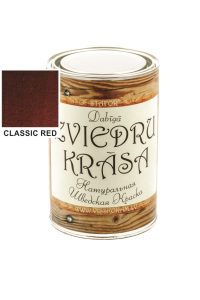



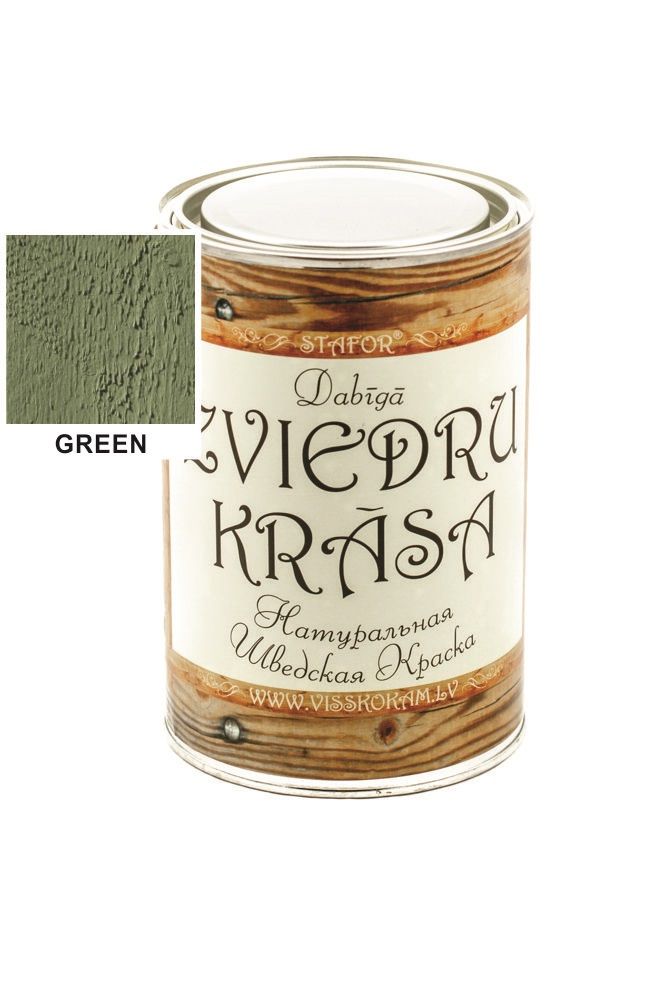
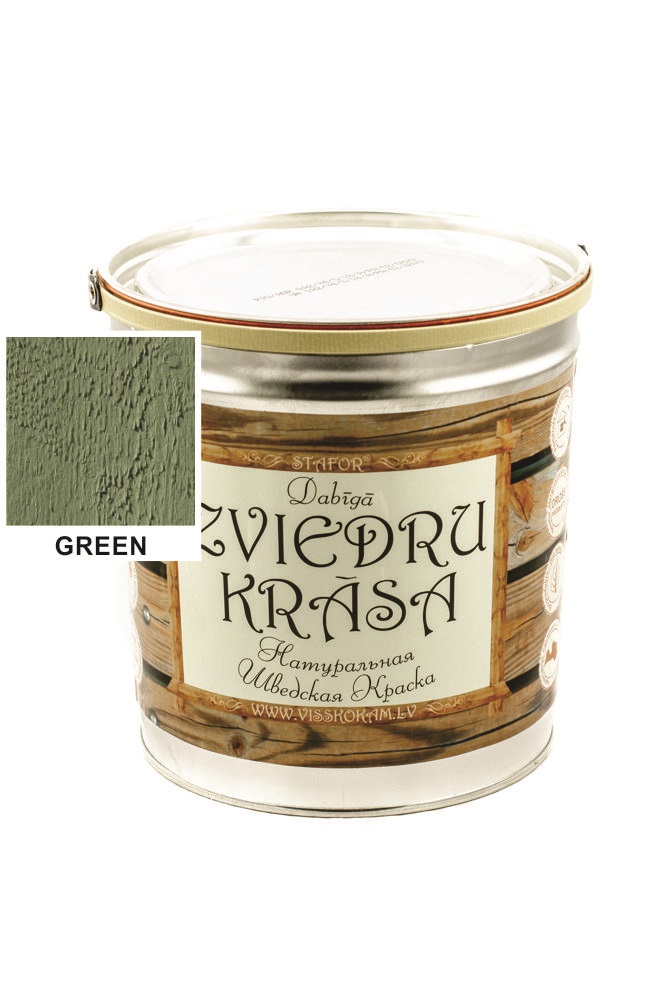
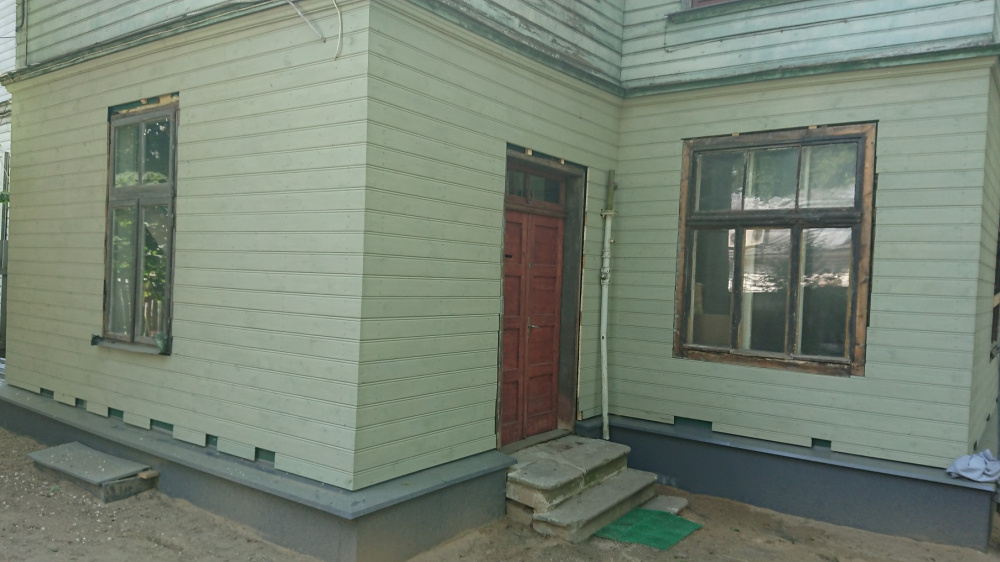
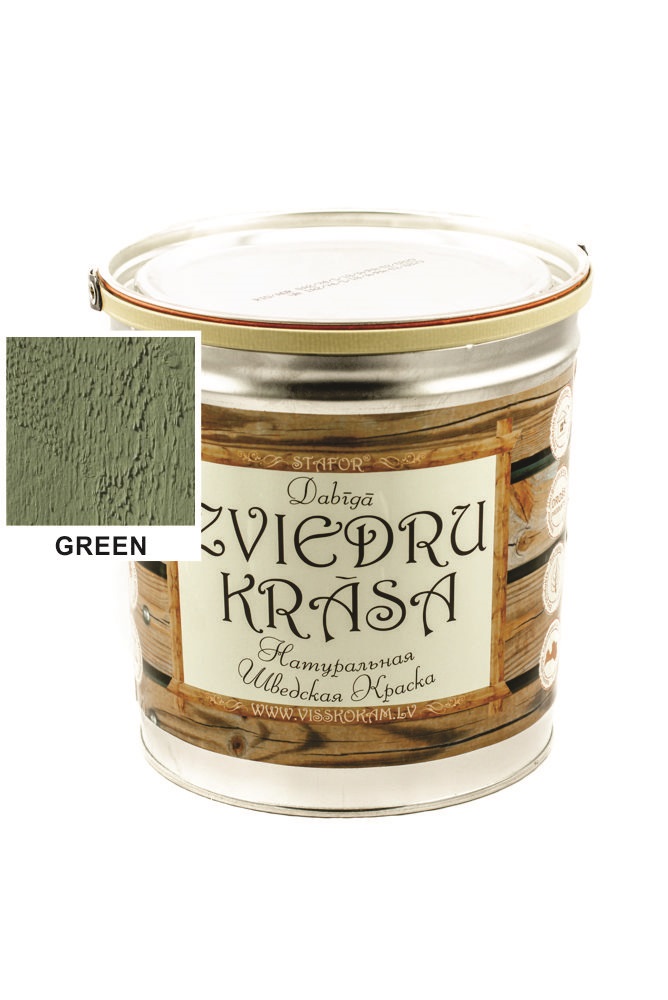
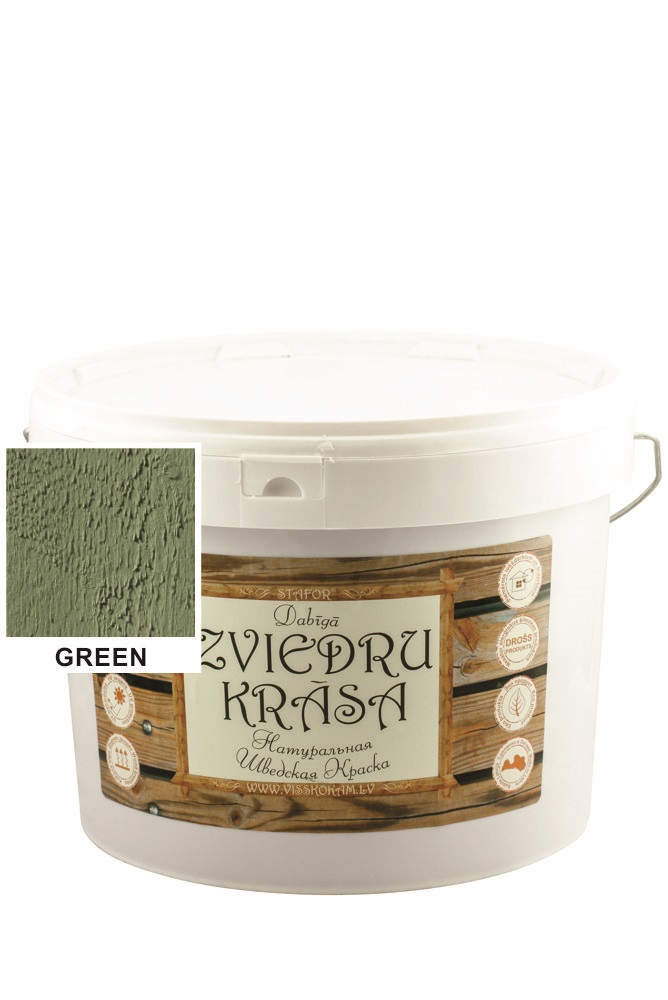
Natural SWEDISH paint green
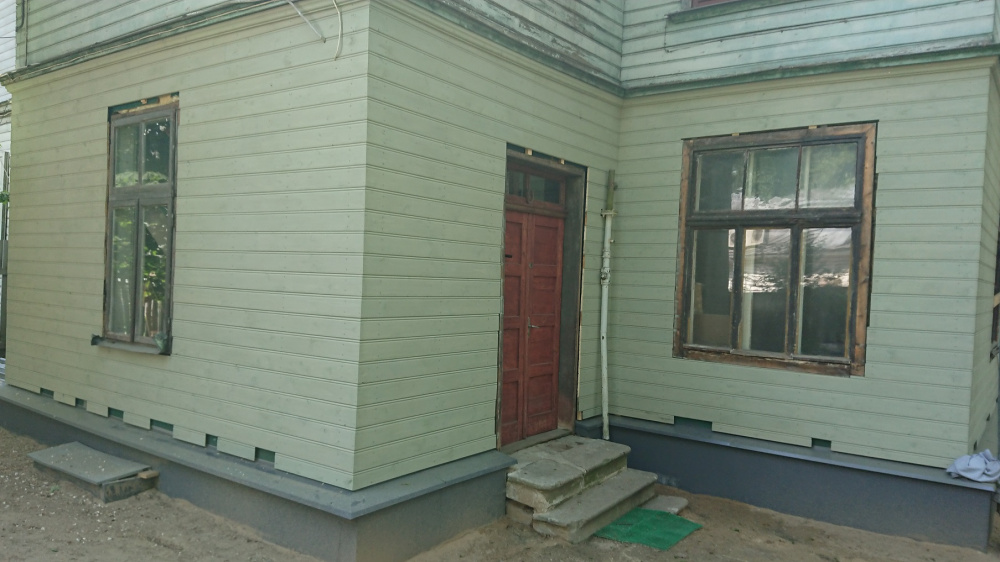
Traditional Swedish paint has been used in Sweden and Latvia since the 17th and 18th centuries to this day. Swedish paint is designed for painting untreated wooden surfaces and is suitable for painting farm buildings, fences, thatched roofs and wooden facades of residential buildings. The paint is environmentally friendly and does not harm the environment; the painted wood “breathes”. The compounds in Swedish paint protect the wood from rot and mould and preserve its surface.
Traditional Swedish paint has been used in Sweden and Latvia since the 17th and 18th centuries to this day. Swedish paint is designed for painting untreated wooden surfaces and is suitable for painting farm buildings, fences, thatched roofs and wooden facades of residential buildings. The paint is environmentally friendly and does not harm the environment; painted wood can “breathe”. The compounds contained in Swedish paint protect the wood from rot and mould and preserve its surface. Swedish paint is applied to the surface only once, and no preliminary surface preparation is required, except for the removal of dust, old paint, mould and other contaminants. The paint is also suitable for painting mineral surfaces; no filling or priming of the surface is required. The natural pigments in the paint are resistant to fading. The paint is suitable for both interior and exterior use.
Application: Swedish paint is applied with a brush. The paint is applied to the entire surface with broad strokes and rubbed in to fill the pores and cracks in the wooden surface. Make sure that there are no unpainted areas, as the surface will not be even when subsequently painted. It is recommended to choose windless weather for painting – then the paint will dry slowly and adhere better to the surface being painted. The paint is not suitable for painting window frames and doors.
Drying time: 2–6 hours, depending on the conditions of wood treatment.
Coverage: 4–6 m²/l, depending on the absorbency of the wood.
Storage: in original packaging in warm storage rooms.
Safety: The paint is non-flammable and harmless to human health.
Tool cleaning: Tools and hands should be washed with water.
Wood is a traditional building material in Latvia, delighting residents with its natural beauty and creating a feeling of warmth and comfort in the home.
To preserve wood for as long as possible, it must be protected from adverse weather conditions and pests. Special protection is needed for the facades of wooden houses, farm buildings and other structures. One popular way to protect them is to paint the buildings with traditional Swedish paint. Swedish paint is also called “flour” or “earth” paint, names that come from Scandinavia. It is made only from natural materials, using the unique ability of linseed oil to absorb into the pores of the wood, and flour glue (paste), which, when dry, provides “breathable” protection for the wood against moisture and the oppressive effects of salts on various wood infections and fungi. Most modern polymer paints do not provide adequate protection. Swedish paint is particularly suitable for untreated wood. By deeply penetrating the wood, it provides long-term protection (15-20 years) without forming a cracking or flaking film on the wood.
A smart homeowner will appreciate the affordable price of Swedish paint and its reasonable price-quality ratio.
Hazard categories: –
Signal word: –
Contains: –
Product exposure characteristics: –
Safety requirement symbols: –
Additional labelling: P102-Keep out of reach of children.
What you need to know about Swedish paint: questions and answers.
What is Swedish paint?
Traditional boiled flour paint, which has been used in Sweden since the 17th century and continues to be used today.
What is the composition of Swedish paint?
Swedish paint contains flour paste, linseed oil, natural pigments and various additives.
What can be painted with Swedish paint?
Swedish paint is ideal for long-lasting protection of wooden facades and wooden structures exposed to the environment. It is well absorbed into the wood and forms a protective layer on it. The paint can also be used to cover mineral surfaces (plaster, mineral boards, etc.).
What are the main properties of Swedish paint and how does it differ from linseed oil-based stains?
Linseed oil stains fill some of the pores in the wood, thereby reducing moisture absorption. The linseed oil in Swedish paint performs the same function. In addition, Swedish paint creates a protective layer on the surface of the wood against UV radiation, moisture and insects.
What is the service life of Swedish paint?
Wooden facade finishes protected with Swedish paint do not require repainting for at least 10 years.
How do you apply Swedish paint?
Swedish paint has a thick, gel-like consistency. Therefore, it is best to apply it with a stiff brush or roller, rubbing it into the wood. Particularly good results are achieved on untreated wooden surfaces. We recommend applying two coats of paint.
How long does the paint take to dry?
The paint dries in 12-24 hours, depending on weather conditions.
What is the coverage of Swedish paint?
One litre of Swedish paint can cover 4-5 m² in one coat and about 3 m² in two coats.
Does Swedish paint contain organic solvents and other substances harmful to humans?
Swedish paint does not contain organic solvents; it is water-soluble. It contains only natural ingredients that are not harmful to human health.
How cost-effective is it to use Swedish paint?
Swedish paint is cheaper than most modern chemical paints and has a longer service life.
Protection of relevant surfaces?
After complete drying, wood that has been thoroughly impregnated with Swedish paint may be covered with a layer of salts, similar to frost, which is washed off by the first rain and does not affect the service life of the paint. This is especially noticeable when painting damp wood. The washed-off salts may partially stain adjacent mineral surfaces (concrete, paving stones, etc.). To protect other structural elements, it is recommended to cover them with plastic sheeting until the first rain or to wash the boards lightly after they have completely dried.