


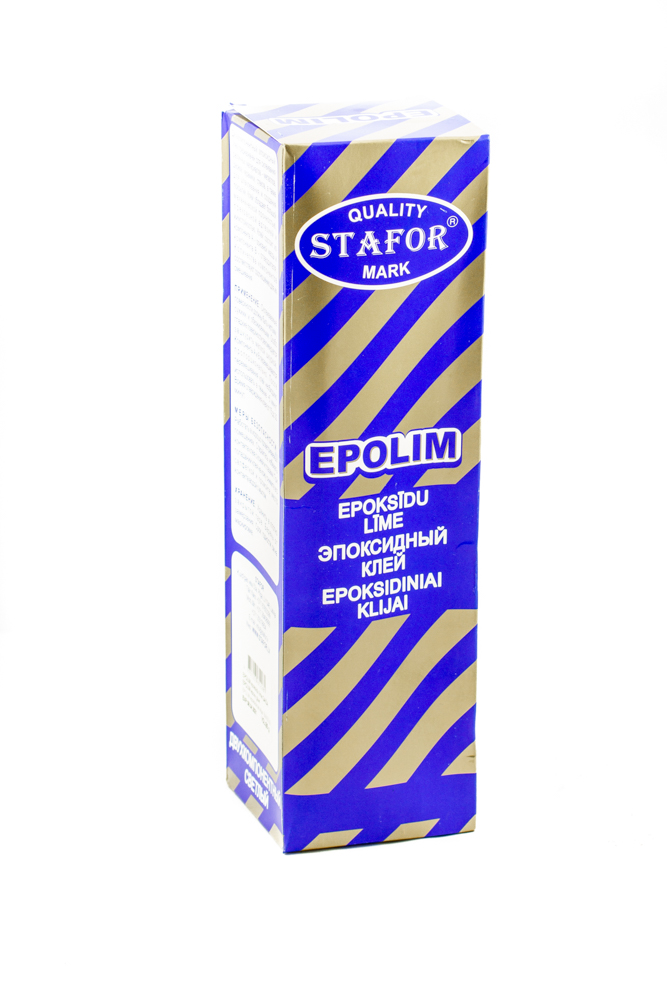
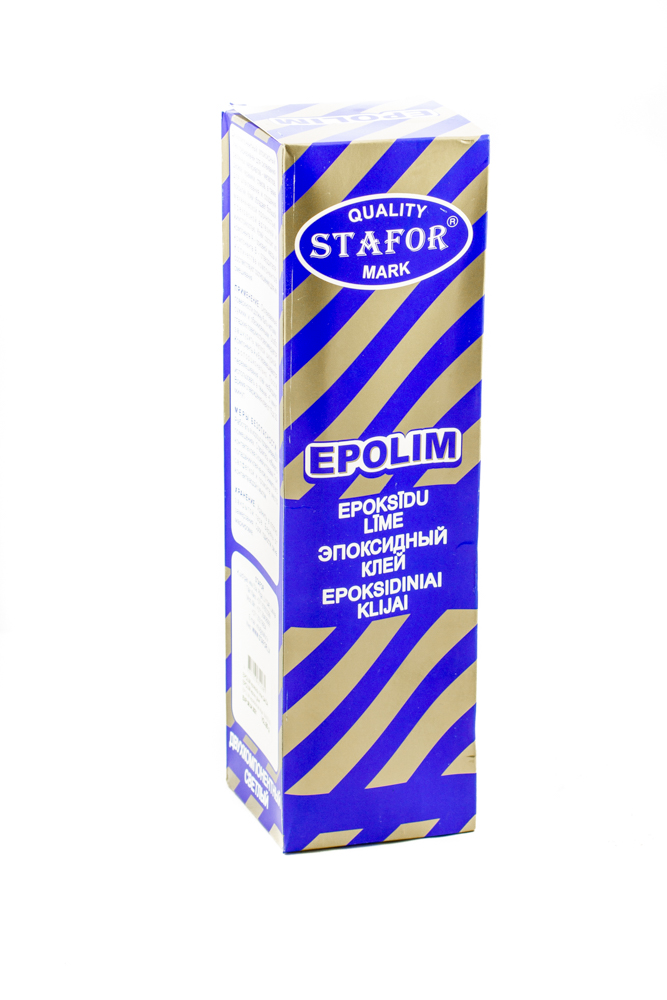
EPOLIM epoxy adhesive LIGHT
Two-component epoxy adhesive is designed for bonding various materials – metal, wood, ceramics, glass, as well as for use as a protective varnish or protective paint layer, and for filling. The adhesive has high mechanical strength, chemical resistance in aggressive environments and excellent adhesion. The adhesive consists of component A – the base mass – and component B – the hardener, which are mixed in specified proportions.
Two-component epoxy adhesive is designed for bonding various materials – metal, wood, ceramics, glass, as well as for use as a protective varnish or protective paint layer, and for filling. The adhesive has high mechanical strength, chemical resistance in aggressive environments and excellent adhesion. The adhesive consists of component A – the base mass and component B – the hardener, which are mixed in specified proportions.
APPLICATION: The surfaces to be bonded must be clean, dry and free of grease. If necessary, they should be cleaned with acetone. It is advisable to treat particularly smooth and shiny surfaces with fine sandpaper. Components A and B are mixed in the specified ratio and stirred thoroughly. After mixing, the adhesive must be used within ~5 minutes. The adhesive hardens completely within 15-30 minutes.
SAFETY PRECAUTIONS: Work in well-ventilated areas. Avoid direct contact of the adhesive with skin and eyes. If the adhesive gets on your skin, remove it with a tissue and wash the area with soap and water.
Component A:
Hazard categories: Eye irritation Category 2.
Skin irritation Category 2.
Skin sensitisation Category 1.
Hazardous to the aquatic environment, chronic Category 2.
Signal word: Danger
Contains: Reaction product: A-(epichlorohydrin) bisphenol, epoxy resin (with an average molecular weight of less than 700); Bisphenol F (epichlorohydrin), epoxy resin; hexanediol diglycidyl ether
Product exposure characteristics: H315-Skin irritant.
H317-May cause an allergic skin reaction.
H319-Causes serious eye irritation.
H411-Toxic to aquatic life with long-lasting effects.
Safety requirement symbols: P202-Do not use until all safety warnings have been read and understood.
P280-Wear protective gloves/protective clothing/eye protection/protective equipment.
P301+P330+P331-IF SWALLOWED: rinse mouth. DO NOT induce vomiting.
P302+P352-IF ON SKIN: wash with plenty of soap and water.
P305+P351+P338-IF IN EYES: Rinse cautiously with water for several minutes. Remove contact lenses, if present and easy to do. Continue rinsing.
P308+P313-IF ON SKIN OR IF CONTACTED: Get medical advice/attention.
Additional labelling: EUH205-Contains epoxy components. May cause an allergic reaction.
Component B:
Hazard categories: Skin irritation Cat. 1B.
Skin sensitisation Cat. 1.
Acute toxicity Cat. 4.
STOT SE3.
Hazardous to the aquatic environment, chronic Cat. 3.
Signal word: Danger
Contains: 1,3-benzenedimethanamine, n-(2-cyanoethyl)-derivatives; 4-tetra-butylphenol; 1,3-benzene dimethylamine; methylhexane-1,6-diamine
Product exposure characteristics: H314-Causes severe skin burns and eye damage.
H302-Harmful if swallowed.
H332-Harmful if inhaled.
H317-May cause an allergic skin reaction.
H335-May cause respiratory irritation.
H412-Harmful to aquatic life with long-lasting effects.
Safety requirement symbols: P101-If medical advice is needed, the relevant information is provided on the packaging or label.
P102-Keep out of reach of children.
P260-Do not breathe dust/fumes/gas/smoke/vapour/spray.
P310-Immediately call a POISON CENTRE or doctor/physician.
P303+361+353-IF ON SKIN (or hair): Remove/Take off immediately all contaminated clothing. Rinse skin with water/shower.
305+P351+P338-IF IN EYES: Rinse cautiously with water for several minutes. Remove contact lenses, if present and easy to do. Continue rinsing.
P310-Immediately contact a POISON CENTRE or doctor.