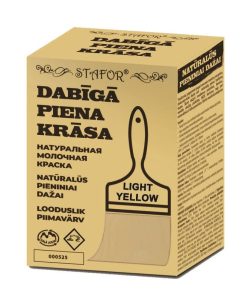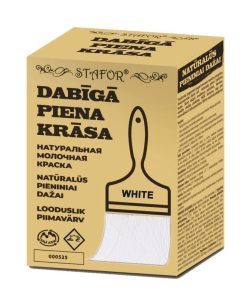

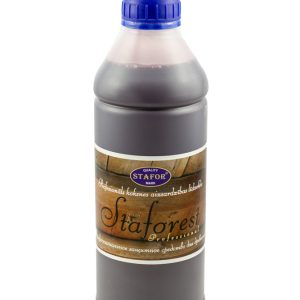


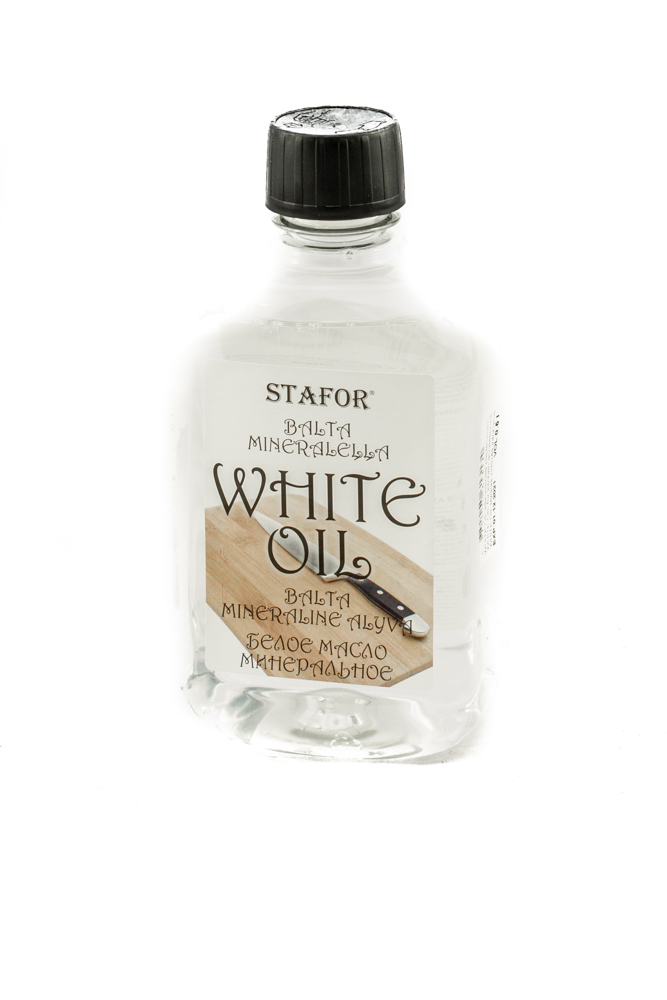
WHITE OIL oil for kitchen utensils
White oil is intended for wooden products used for cooking or serving food. It improves the natural resistance of wood to grease, stains and moisture, and also limits the growth of microorganisms.
White oil is intended for wooden products used for cooking or serving food. It improves the natural resistance of wood to grease, stains and moisture, and also limits the growth of microorganisms.
Treated wood absorbs less moisture, which reduces the likelihood of cracks, makes it easier to care for wooden items and extends their service life.
Application: Apply the oil with a clean cloth, microfibre cloth or paper towel. Rub the oil thoroughly into the wood and only then remove any excess oil. It is recommended to repeat the treatment after 24 hours. Only use the products after the oil has completely dried. It is recommended to oil the wood regularly, the frequency depending on the purpose and frequency of use.
Consumption: Consumption depends on the type and condition of the wood, on average 1 litre per 5-12 m².
Drying time: Depending on the ambient temperature and the absorbency of the wood, on average 24-48 hours, complete drying takes approximately 2-3 weeks.
Safety: Warning! Wood oil can only be used to treat and protect wood materials; it must not be used as a food product!
Storage: In original packaging and in warm storage rooms. Protect from freezing!
Hazard categories: Asp.tox.1
Signal word: Danger
Contains: White mineral oils
Product exposure characteristics: H304-May be fatal if swallowed and enters airways.
Safety requirements: P301+P310: IF SWALLOWED: Immediately call a POISON CENTRE or doctor.
P331: Do NOT induce vomiting.
P405: Store locked up.
P501: Dispose of contents and container in accordance with regulations for hazardous waste disposal.
Additional labelling: P102-Keep out of reach of children.
Differences between wooden and plastic cutting boards
Hygiene of wooden and plastic cutting boards
There is a widely held belief, actively promoted by manufacturers, that wooden cutting boards are less hygienic than plastic, glass, etc. They create favourable conditions for the growth of bacteria and germs. For centuries, even millennia, people have used wooden cutting boards. Can this be explained solely by the fact that wood is widely available and easily accessible?
Recent studies have proven that this is not the case. Wood itself is a hygienic material and is not a favourable environment for the growth or development of bacteria compared to cutting boards made from other materials.
The research was conducted by the Danish Technological Institute, and the results were verified and confirmed by leading institutes in Scandinavia, Germany and Switzerland.
The study included:
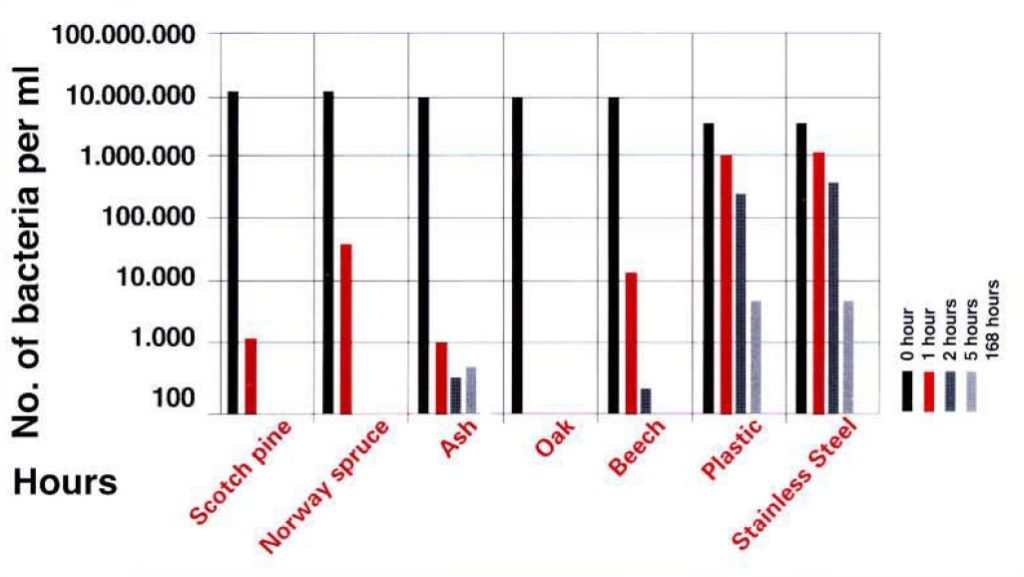
• Applying a material containing bacteria to samples of different types of wood (oak, pine, Norwegian spruce, ash, larch), plastic and steel.
• Harmless bacteria, generally similar to Salmonella, Camphylobacter and Listeria, were used.
• The number of surviving bacteria was recorded at regular intervals.
The following conclusions were drawn:
1. Wood is a less favourable environment for bacteria to survive than synthetic materials and steel.
2. Wood in general, and dry wood in particular, is not a favourable environment for the life and development of bacteria.
Summary of research results:
Source: http://www.kitchensource.com/cutting-boards/pdf/chopblockhygiene.pdf
A similar study was conducted by scientists at the University of Wisconsin-Madison entitled “Wooden cutting boards are safer for food preparation than plastic ones.”
Contrary to popular belief, bacteria die faster on wooden surfaces. For decades, chefs have been advised to use plastic rather than wooden cutting boards when preparing food at home and in restaurants. It was believed that dangerous bacteria, such as salmonella, are absorbed into the cutting board and can thus contaminate solid foods.
Two microbiologists from the aforementioned university discovered that wooden cutting boards “kill” bacteria that survive on plastic boards. The aim of the study was to investigate bacterial contamination of cutting boards in order to find a disinfectant that would make wooden cutting boards as safe as plastic ones. The opposite happened!
They tested several boards made from different types of wood and four types of plastic. The samples were “contaminated” with Salmonella, Listeria and Enterohemorrhagic Escherichia coli bacteria. The results were surprising — wooden boards, often by a large margin, were found to be much more hygienic than plastic ones. Three minutes after “contamination,” 99.9% of the bacteria on the wooden boards had died, while not a single bacterium had died on the plastic boards. After one night at room temperature, the number of bacteria on the plastic boards had even increased.
Of course, this does not mean that after cutting chicken or meat, you can immediately cut vegetables on the same board, but, as the researchers note, “wood has an advantage over plastic because minor sanitary mistakes are not as dangerous on wood as they are on plastic.”
Source: http://www.kitchensource.com/kitchen-islands/pdf/woodvsplastic.pdf